Blog
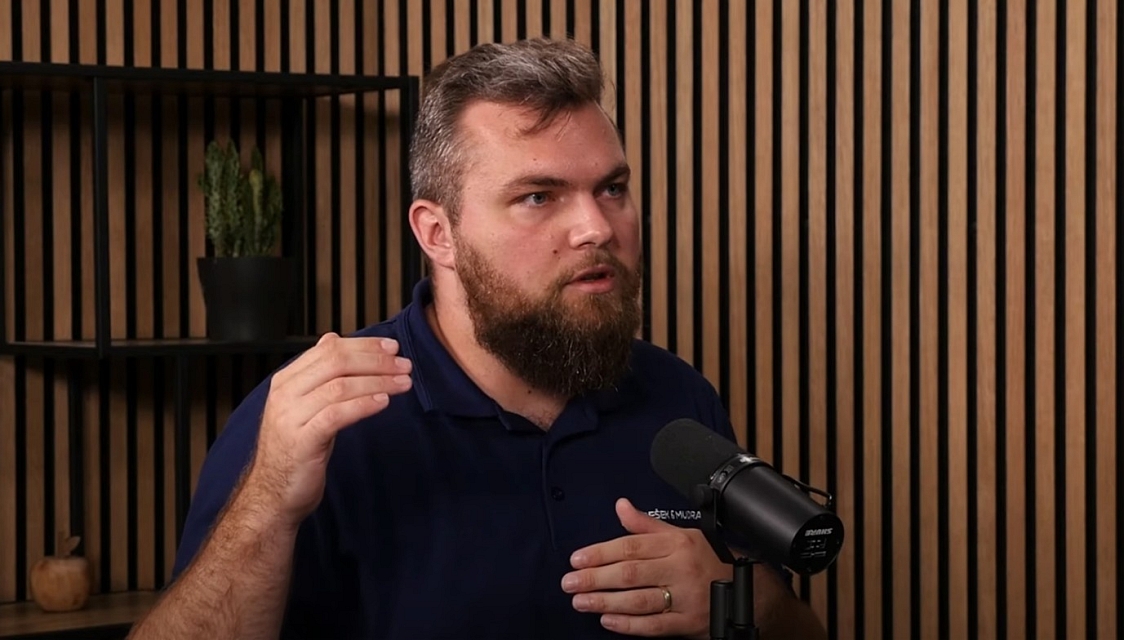
Petr Pesek grew up in a technical household in a home powered by its own hydroelectric plant. In 2021, he and a friend founded PESEK and MUDRA Solar Systems, a company that installs photovoltaics throughout the Czech Republic. Find out more about their approach to residential energy and the use of Unipi Neuron S103 for smart energy management in the following interview with founder Petr Pesek.
Could you introduce PESEK & MUDRA company to us?
We build photovoltaic power plants (PV plants) with a focus on energy consumption – for family homes, small businesses, and local communities. During the initial contact with customers, we are primarily interested in how they manage their energy. Only then can we design a truly efficient PV system. We ask about appliances, water heating methods, and so on. We also educate them from the very beginning. We invest considerable effort into helping them better understand their property's energy profile and how it can be optimized using photovoltaics and intelligent management.What led you to renewable energy?
I grew up in a water mill that has been in our family since 1906 – aside from a break during forced nationalization. My childhood bedroom was right above a humming hydroelectric turbine. Because of this, the idea of having one's own independent energy source is deeply ingrained in me. We all need energy just as much as food and water. However, I realize not everyone can have a water source, whereas you can install photovoltaics on almost any square centimeter of the planet. It makes sense to me to offer energy independence to everyone.How do you view the development of the photovoltaic market?
If we look specifically at the Czech Republic, the market experienced a boom in 2006 stimulated by Green Bonus subsidies. At that time, mainly large photovoltaic parks were built. It wasn't entirely fortunate and still has negative effects today. Then ten years of silence came. During that time, anyone with photovoltaic panels was labeled as a shady energy dealer or a solar baron.Eventually, the hostility faded, and the construction of PV systems with batteries or thermal energy storage in water began. Simultaneously, the New Green Savings Program emerged, focusing on residential homes – subsidies for insulation, boiler replacements, and more. Photothermal systems and other sources were also on the rise.
The war in Ukraine and the fear over gas supplies turned the market upside down.
In 2022, extreme energy price hikes occurred due to the war in Ukraine, gas supply fears, and a chain reaction of energy retailer bankruptcies. The market was turned upside down; people, in an effort to protect themselves from high, excessively high prices, began buying their own solar sources mindlessly. Suddenly, everyone with hands and feet started a company. Both the firms and the market overheated, including the manufacturing side in China. Today, for the same reasons, the market is bleeding, especially among installation companies. The connected B2B segment is suffering too. Only companies with the strongest investors are holding on.
Now the market is consolidating. Stable, well-structured companies like ours are maintaining healthy demand.
In the future, photovoltaics will become a common household utility, like a heat pump, gas boiler, or ventilation. It will also be necessary due to energy standards for new buildings. In this era, it will be even more critical to distinguish between cheap, low-quality installations – built just to have something on the roof – and those that are efficient and high-quality. Only time will tell which path people will choose.
Let’s move to efficient consumption and production management. How do you approach it?
Automated regulation is key for renewables. If you have a PV plant with an energy controller (a smart digital PV controller) at home and you are at work, it automatically takes responsibility for managing flexible consumption. The controller receives various inputs via Wi-Fi – such as weather forecasts, current plant production, or the house thermostat. Based on this, it switches on the air conditioning, the heat pump for water heating, etc.The controller can be so sophisticated that it recognizes whether the house is currently occupied. It estimates whether consumption will rise, whether it can run the AC at full blast, or whether it should charge the batteries. Even when you are at work and the sun is shining on the panels, something should be happening with that electricity at home. Automatically.
Photovoltaic batteries are the most basic way to handle volatile production. Relative to their utility, they are expensive. We recommend using energy for thermal accumulation in a water heater (boiler), for which we use Unipi Neuron S103 control units and our own software. This turns an ordinary boiler into a "secondary battery" with a much better price-to-energy capacity ratio. You can store up to 20 kWh of energy in a 300-liter boiler.
So, you can manage and route production exactly where it's needed.
Exactly. It’s all based on data collection. For energy flexibility to work efficiently, we need an accumulation tank or boiler – ideally 300 liters with four-point temperature measurement. A standard boiler has one thermometer; you see hot water at the top and cold at the bottom. But if you place four thermometers at 25% intervals of the water column, you can accurately determine if it is nearly full or half empty.This is valuable data for us. We can easily calculate that the house has, say, a 2 kWh capacity that we can immediately switch on and consume. The energy flexibility market works on this same principle. When a retailer has an excess of solar power or negative prices appear on the day-ahead market because the wind started blowing in the Netherlands, they know exactly how much electricity they can store in boilers. This is why the controller is key, and Unipi hardware is fantastic for this. Combined with our software, we can handle all these settings.
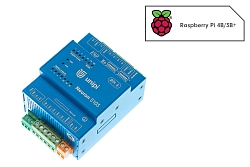
The Unipi Neuron S103 with its integrated Raspberry Pi is the most compact and affordable controller with open-source software. During my research, it met all my needs.
Why did you choose the Unipi Neuron S103 specifically?
We chose this model because it is the most compact and cost-effective. The Unipi Neuron S103 is built on the integrated Raspberry Pi computer, which is a platform our developer knows well. It is hardware with open-source software. These are the most important parameters for us. Many controllers on the market are closed systems, which is a problem. With privately owned and controlled solutions, you don't get extensive documentation or community data, and it restricts your development.I also like the possibility of custom development at Unipi – a series of units tailored to our specific needs. I would like to reach this stage once our development advances and we have a larger volume of controllers in operation with steady demand.
How did you get to the solution you now provide to customers?
First, I verified the choice of the control unit by testing a prototype. I worked in IT in the past and knew Raspberry Pi from those days. Once I realized this connection, Unipi came out on top of my research. I ordered the first unit and started testing.Then I discovered that Unipi offers training courses for Mervis – a complete software platform provided free of charge as a basis for Unipi controllers. I prepared a prototype, and later we applied its principles in power plants to regulate hot water heating.
Back then, I connected Victron Energy inverters via Modbus, downloaded the data, and created the logic for power regulation. This resulted in energy storage through water heating in symbiosis with batteries. Once that system was ready, we started offering it to customers.
The second step was moving away from Mervis. We began developing our own operating system that reflects IoT philosophy and the fact that there are many data-collecting controllers in multiple locations. No one manages them locally, yet they must update and function reliably in a connected cluster. Most importantly, they must correctly evaluate the data. I initially thought it would take about two months. It’s been two years, and I think development will continue for another year or two.
.jpg)
What results have you achieved with the Unipi controller and your own system?
Currently, we use the system to manage hot water heating and have perfectly optimized the overall flow of energy storage and usage. For example, solar batteries don't handle high-current charging well. When such an increase in current occurs, we smoothly start the water heater and maintain the battery charging current at a specific value. This flattens the battery's charging curve, utilizes the extra energy supply, and makes the most of the peak sunshine hours.We’ve also included features in the system that will reset the entire connection if the system freezes or crashes. With our own OS, we can seamlessly manage 140 connected devices. Mervis doesn't allow that; it’s focused on local closed systems like boiler rooms. That’s why we are working on a more flexible environment where you can influence all installed units with a single click.
And how are you managing to connect software built on Node-RED with Home Assistant?
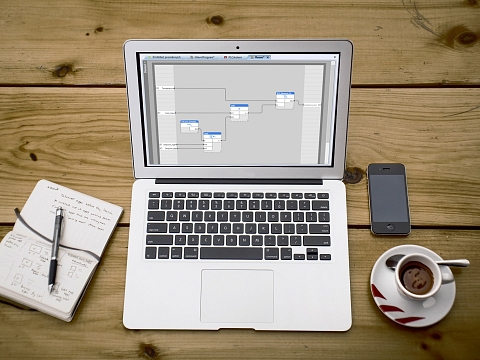
The whole connection starts on NixOS, a special type of Linux operating system. We implemented various settings into its kernel and integrated Unipi’s open-source EVOK driver.On top of the OS, we can install any platform we want – Node-RED, Home Assistant, or anything else. The foundation for us will be Home Assistant and Node-RED. We prefer Node-RED for the logic because Home Assistant will serve as the functional tool for the client's home automation. They can easily click through everything in the user interface. But for our concept, we prefer to set the logic – which we migrated from Mervis to Node-RED and upgraded – ourselves to ensure smooth functioning across all installations. Node-RED is easily and highly scalable in this regard.
Many PV controllers on the market are half-baked solutions that don't meet even a fraction of the functions a customer needs to operate a power plant.
How does your solution with Unipi and future software differ from other controllers on the market?
During our software development, we found out that no operating system installable on Unipi Neuron accounts for the IoT philosophy. Usually, you physically go to the controller, program it locally, and tune it for that specific home.Our view is different. We have many installations across the country and need the devices to communicate externally and follow remote commands – reliably and robustly. Even if a customer deletes something from the control unit, everything must automatically reinstall itself.
This is the weak spot for most photovoltaic units. They are half-baked and lack the features needed for real-world PV plant operation. No one questions it. Installation companies struggle with high claim rates and unnecessary troubles.
With our new OS, we want to eliminate these gaps. But software development is terribly slow because it is not the core of our business.
How would you rate the reliability of the Unipi Neuron S103 in real conditions?
Throughout our time in operation, we replaced only one controller. All of them have proven to be robust and reliable devices in the field.What would you recommend to those interested in intelligent water heating control? Is there anything they should avoid?
If they are considering water heating with PV, they should avoid small accumulation tanks. People think an 80-liter boiler is enough because it was enough before they had photovoltaics. But for operation with a PV plant, you need a larger tank – ideally 300 liters. With a small boiler, the water would reheat immediately after a shower, drawing energy unnecessarily from batteries that should be saved for evening consumption. You need to store heated water in a larger vessel and treat the boiler as an alternative battery.So, what does efficient, intelligently controlled water heating by photovoltaics look like?
Let’s start with an inefficient way. If the boiler is small and unmanaged, it’s a problem. By 11:00 a.m., the battery is charged and the boiler is hot. You don't use much water during the day. The peak demand comes in the evening when people take a bath. Once the water is used, the boiler switches on immediately. But the sun isn't shining anymore, so it drains your battery in two hours and then continues to heat for another four hours using grid electricity.Many people try to solve this by increasing battery capacity, but that only helps the installation company’s business results, not yours – and certainly not the planet.
For basic management, even a simple timer that blocks the heater during evening and night hours would help. The water cools down until the timer turns it back on the next day, around 11:00 a.m., when the sun is likely out. This is quite a significant advantage at a very low cost. Or you can do it properly with the Unipi controller, where the boiler perfectly complements the battery as its thermal partner for heat utilization.
Is there anything that surprised you about Unipi as a company, not just the controller?
I like Unipi support. It works perfectly. I take inspiration from them so that our service functions in a similar spirit. I most enjoy the speed and patience of their answers. I'm glad Unipi supported us even in our early days. You knew nothing about our company, yet everyone patiently attended every small detail. This encouraged us to continue developing our own software for the Unipi solution.The market is currently dominated by subsidy hunting – cheap, fast, from China.
What challenges have you faced in managing energy, and how did you overcome them?
The main challenge is to explain to people that management is necessary. It’s an endless task. We explain it during consultations, and our marketing communicates it through videos and case studies.New buildings present another challenge. We encourage customers to consider photovoltaics from the ground up during construction. That’s the only way the entire system truly makes sense. You need to consider which heat sources will be integrated with the PV system – whether you opt for a heat pump and hydronic underfloor heating, where the technology will be located, and, for example, if the house is correctly oriented toward the south.
Many people already understand that they can generate electricity with rooftop solar panels. We teach them how to use solar energy wisely. For example, we help them understand that photovoltaic electricity is not available from the socket at any time. But I expect it will take about 10 years for the market to reach this level of understanding. The mainstream doesn't yet view photovoltaics in this comprehensive way. The main focus is on subsidies, cheap and quick installation, and Chinese technology. And that tends to undermine our entire education on controlled production and consumption.
So, is education part of your plans for the future?
Yes, definitely, to a reasonable extent. After all, it’s not the primary purpose of our business.What are your long-term plans for smart PV management?
We plan to finish the software and launch it in 2026. We still need to create the network infrastructure so that the control units can connect to us securely. In practice, whenever a customer has a problem and needs service, he will be able to connect with us immediately through our internal networks.Anything you’d like to add in conclusion?
I’d like to emphasize that we are conservative compared to the rest of the PV market. But we benefit from this approach every day. We maintain a solid technological base: the same batteries, the same inverters, and the same controllers. If a customer calls today saying they’ve had a Unipi controller, Victron inverters, and Pylontech batteries from us for three years, we have everything compatible in stock for replacement.Most Czech PV companies cannot make this promise. During the time they've been in business, they might have cycled through 50 different technologies simply because one brand was cheaper at a certain moment. Very few companies remain fiercely loyal to their technology. We have confirmed for ourselves that this is the only way to provide customers with quality, reliable service practically instantly.